Canterbury Cathedral
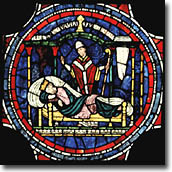
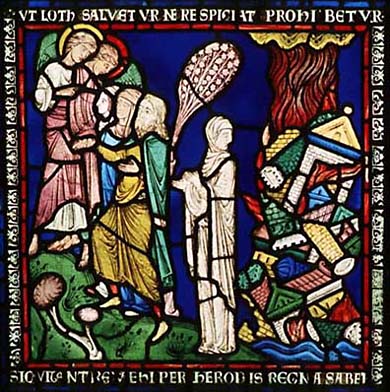
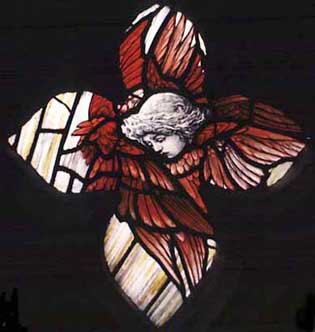
The first Archbishop of Canterbury was St Augustine who arrived on the coast of Kent as a missionary to England in 597 AD. He came from Rome, sent by Pope Gregory the Great. On his arrival Augustine was given a church at Canterbury by the local King Ethelbert whose Queen, Bertha, was already a Christian. This building had been a place of worship during the Roman occupation of Britain. Soon consecrated Bishop Augustine established his seat (or "cathedra") in this place as the first Archbishop of Canterbury. The present archbishop, George Carey, is 103rd in the line of succession. Until the 10th century the Cathedral community was a family of clergy, living a regulated life as the household of the Archbishop. Not until 998 do we find evidence that they were living by the Rule of St. Benedict as a formal monastic community. The Benedictine community of monks continued until the monastery was dissolved in 1540. Canterbury Cathedral is linked to the lives of many great ecclesiastical and national figures. The one who became most famous of all was Thomas Becket, who was murdered in his cathedral on 29 December 1170. Appointed by his King and friend, Henry II, to bring the Church to the heel of the monarchy, he did the reverse. Four knights, with their own agendas of complaint, thinking to ingratiate themselves with the King, came to Canterbury and killed the Archbishop in his own Cathedral. In the Reformation period Canterbury had a series of distinguished Archbishops, among them Thomas Cranmer, who compiled the first two Prayer Books and established what was to become the liturgical tradition of the Church of England and Anglican Churches the world over. With the Civil War, the Cathedral was sacked by the Puritans (1642), the Cathedral Chapter was dissolved, and it was not until the restoration of the monarchy in 1660 that the Church of England was re-established and life returned to the Cathedral. Few changes occurred until the middle of the nineteenth century, when a series of energetic Archbishops and equally vigorous Deans, began a transformation of the life of the Cathedral. The twentieth century has seen a major restoration of the Cathedral fabric, the revival of pilgrimage (now on ecumenical lines), a re-ordering of liturgical services and a great renaissance of the Cathedral’s music. In 1982 Pope John Paul II visited Canterbury and with Archbishop Robert Runcie prayed at the site of St. Thomas Becket’s martyrdom. The Cathedral enjoys many links with cathedrals and churches throughout the world. A special relationship, both historic and contemporary, is with the Abbaye Notre Dame, Le Bec-Hellouin, in Normandy - normally referred to simply as 'Bec'. Archbishop Lanfranc, Abbot of St Stephen's, Caen, and previously Prior of Bec laid out the monastic plan of the Cathedral in 1070 and left the first great Romanesque church. His successor, Abbot Anselm of Bec - arguably the greatest of the Archbishops of Canterbury - followed him in 1093. Both lie buried in the Cathedral under stones inscribed with their names - Lanfranc in St Martin's Chapel and St Anselm in the chapel dedicated to his name. Today, a warm relationship exists with the community at Bec. This includes the sister community of nuns who live in the same valley at the Monastére Sainte Françoise-Romaine, over whom the Abbot of Bec also presides. The common spiritual concern is for the unity of the Church, and visitors travel frequently between the two communities, just as did the monks of the 11th century. Stained Glass: Two events occurring in 1170 and 1174 laid the foundations of what today is regarded as one of the most important stained glass collections of the late 12th century in the world. The murder of Thomas Becket, as despicable as it was, provided the Cathedral with a powerful attraction to pilgrims, who came to Canterbury in enormous numbers to make offerings. When disaster struck again with the destruction by fire of the Romanesque Quire in September 1174, it was the proceeds from this lucrative pilgrim trade that enabled the monks to build the new Quire and the Trinity Chapel and to fill it with stained glass of outstanding splendor The fact that the Canterbury monks did have a steady income at their disposal resulted in the creation of a building of unprecedented scale and complexity which was completed in a remarkably short period of time. The glazing scheme was conceived in close co-operation between the master builder, glazier and the monks. By 1176, the complete program was determined and brought to life within 44 years by workshops of English and French craftsmen. The scheme is thus unusually homogenous in its planning and execution, reflecting also its close integration in the overall concept of the eastern arm of the church which was to serve two distinct categories of worshipper, the monks and the pilgrims The medieval Cathedral was part of a priory, and in the body of the Quire the monks observed the daily routine of the monastic office. The windows of this part are therefore of a very different character from those in the Trinity Chapel which served the pilgrims for their devotions at St. Thomas' shrine. Besides numerous windows in side chapels, the glazing scheme for this reason consists of three major series, one for the Quire and one for the Trinity Chapel respectively, and the third on clerestory level linking both parts of the building together again. In the Quire aisles, a biblical emphasis prevailed. Here the mediaeval monks could study the twelve windows from both Old and New Testaments, arranged to demonstrate the way in which events of the Old Testament were thought to prefigure events in the New. Stained glass window of Escape from Sodom. This typological interpretation is based on one of the most popular mediaeval books, the Biblia Pauperum or 'Poor Man's Bible'. The two surviving windows of this series in the north Quire aisle give a striking insight in the medieval way of interpreting the world. For the pilgrims visiting St. Thomas' shrine, a different subject matter was requested. The twelve windows of the Trinity Chapel therefore illustrated two detailed accounts of Becket's life and the miracles that had taken place at his tomb between 1171 and 1173. Called the Miracle Windows, the stories chosen show the full gamut of medieval society receiving comfort and aid from St. Thomas' intercession. The richly colored glass would for many pilgrims be the finest thing they would ever see, a fitting prelude to the shrine itself. Finally, in the clerestory, the so-called Genealogical Series depicts paired figures, beginning on the north side with the Creation and Adam and culminating on the south side with the Virgin Mary and Christ. With 86 figures taken from the gospel of Luke, this genealogy of ancestors of Christ is the largest of its kind in art. Only 48 figures, however, have survived, some now relocated in the south west transept and the west window and replaced with nineteenth century copies in their stead. Although the scheme has suffered over the centuries from many forms of destruction, the late 12th century glazing at Canterbury has today established its firm place as the most complete collection of its kind in England. The glazing of the western parts was less fortunate. The whole scheme of nave windows has been almost completely swept away, with only the two great windows in the west wall and in the north west transept surviving. Both these windows are associated with kings, Richard II and Edward IV, and although in particular the 'Royal Window' of 1485 in the north west transept had suffered from the notorious attack by Culmer in the 1640's, there is a substantial amount of glass left to tell of the superb quality of 14th and 15th century draftmanship and glazing skills. Canterbury's rich heritage of mediaeval stained glass cannot really be matched by later windows, but there are a number of important twentieth century ones that should be included in any stained glass itinerary of the Cathedral. To name but two, the Christopher Whall window of 1906 in the west wall of the south west transept and the Erwin Bossanyi window of 1957 in the south east transept are both regarded as eminent representatives of their respective era. Although they differ enormously from their mediaeval ancestors, these windows are now an integral part of the glazing of Canterbury Cathedral, contributing to its diversity and its sheer splendor. The stained glass of the Cathedral is thus justifiably recognized as one of its great treasures. |